Planning & Cost
Do you need a permit for a bathroom remodel?
Permit rules vary by city and county, but here's the general principle and how to find out what your project actually needs.
Published August 24, 2026
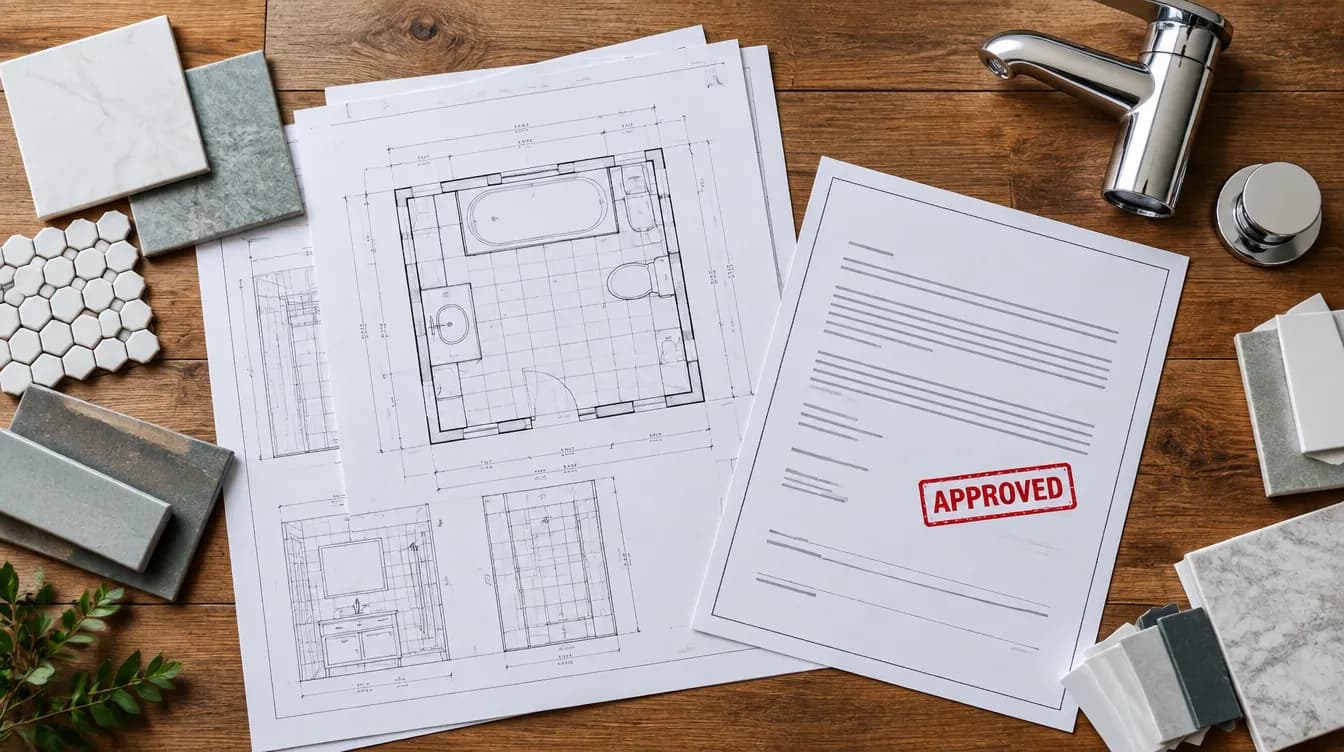
The general rule: if your bathroom remodel touches plumbing lines, electrical wiring, or structural framing, you likely need a permit. If you're only replacing surface-level fixtures in their existing locations, you often don't. The exact answer depends on your city or county, so this is a "check locally" question, not a national one.
Here's how to think it through before you assume either way.
What usually doesn't require a permit
Minor, cosmetic work generally stays outside permit requirements in most jurisdictions:
- Replacing a faucet, showerhead, or toilet without moving the supply line or drain
- Re-tiling a floor or wall in the same location
- Swapping a vanity for a similarly sized one
- Repainting or replacing a mirror or light fixture cover
The common thread: nothing structural, plumbing, or electrical is being altered, only cosmetic surfaces are being updated.
What usually does require a permit
Once a project touches any of the following, a permit is the norm in most places:
- Moving plumbing. Relocating a toilet, sink, or shower drain changes supply and waste lines, which almost always triggers a permit.
- Adding or altering electrical circuits. New outlets, a new exhaust fan circuit, or updated lighting wiring typically needs an electrical permit.
- Structural changes. Removing or altering a wall, even a non-load-bearing one in some jurisdictions, usually requires sign-off.
- Gas line work. Any change to a gas line for a water heater or similar fixture needs a permit almost everywhere.
Why the permit system exists
Permits aren't paperwork for paperwork's sake. According to the International Code Council, the organization whose model codes most U.S. cities and counties adopt, the permit and inspection process exists to keep occupants safe: codes set minimum standards for structural integrity, electrical safety, plumbing, and ventilation. A permit means a code official reviews the work before walls close up, catching problems while they're still fixable.
There's also a resale angle. Permitted work shows up cleanly in a home inspection and title search. Unpermitted work can cause real friction later: an appraiser may not count the renovated space, a lender may hesitate, and a buyer can ask for a price reduction or walk away entirely when they find out a bathroom was remodeled without the required sign-off.
How to actually find out
There's no substitute for asking. Two reliable paths:
- Call or check your local building department's website. Most cities and counties publish permit requirements by project type. Search "[your city] building permit bathroom remodel."
- Ask your contractor directly, before work starts. A contractor who works regularly in your area should already know what triggers a permit locally and should pull it as part of the job, not leave it to you. If a contractor suggests skipping a permit you're pretty sure is required, treat that as a red flag, not a shortcut.
Permit review and inspection scheduling can add time to a project, sometimes a week or more depending on how busy your local building department is. Building that into your planning timeline avoids a surprise delay once demolition has already started.
If you're not sure what your specific project needs, a free quote from a local contractor is a good way to get a straight answer alongside your pricing, since a contractor working in your area will already know your jurisdiction's rules. For a broader look at how permit timing fits into the rest of the project, see our remodel timeline guide.
References
- International Code Council: why the building permit and inspection system exists, and its role in occupant safety
- Federal Trade Commission, Consumer Advice: general guidance on verifying a contractor and project scope before work begins
Ready to get started?
Get a free, no-obligation quote from a vetted bathroom remodeling contractor in your area. Takes about 2 minutes.
Get My Free QuoteTrusted by 3,200+ homeowners across 48 states